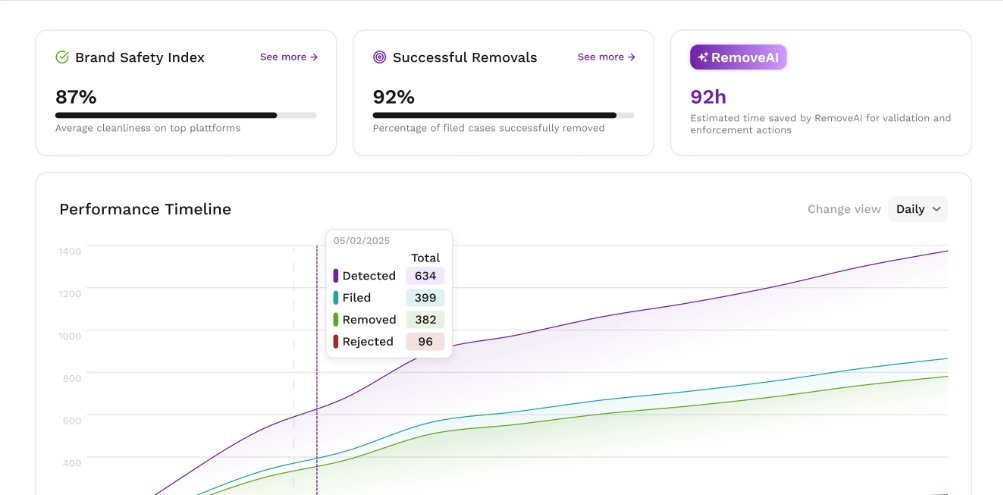
In today’s fast-paced digital landscape, businesses and marketers face a constant challenge: keeping track of how their content is performing, where it’s being shared, and how their brand is being perceived online. As AI continues to influence content discovery and visibility, it becomes increasingly difficult for brands to be recognized in AI-generated responses, making it essential to adapt monitoring tools accordingly. Manually tracking every mention, share, or engagement is nearly impossible—and that’s where automated content monitoring tools come in. Automation streamlines the monitoring process, reducing manual effort and improving efficiency.
AI-generated content is reshaping how information is consumed, making content monitoring more critical than ever.
What Is Automated Content Monitoring?
Automated content monitoring refers to the use of software tools to track, analyze, and report on digital content across websites, social media platforms, forums, and other online spaces. Automated content monitoring involves data collection from a variety of sources, including multiple pages such as landing pages, customer portals, and contact pages, to ensure comprehensive coverage of a company's digital presence.
Key tasks include:
- Tracking brand mentions: Find out when and where your brand, products, or campaigns are discussed.
- Monitoring competitors: See how competitors’ content is performing and identify gaps or opportunities.
- Analyzing engagement: Measure likes, shares, comments, and overall audience interaction.
- Detecting misinformation or misuse: Spot unauthorized use of your content or potential negative mentions early.
- Monitoring changes across different pages and landing pages: Ensure content accuracy and compliance across your site, including contact pages and terms of service.
Integration with other business tools and platforms is key for streamlining workflows and improving data accuracy. Companies use these tools to maintain data quality, brand integrity, and quickly respond to changes or new data updates. Monitoring website content is essential for ensuring a positive experience for customers and users, as well as maintaining site reliability. Real-time brand reputation management tools scan social media and news for mentions, allowing brands to address issues within minutes. These tools also help brands understand how they are being represented in AI-generated content.
By automating these processes, businesses can stay ahead of trends, protect their reputation, and make data-driven decisions.
Benefits of Automated Content Monitoring
- Save Time and Resources: Automated tools handle the heavy lifting of tracking mentions and engagement, significantly reducing time-consuming manual processes and freeing your team to focus on strategy and creation.
- Prevent Missed Opportunities: Automation helps prevent missed opportunities by capturing valuable insights and updates that might otherwise be overlooked with manual monitoring.
- Protect Brand Reputation: Quickly detect negative mentions, misleading content, or unauthorized use of your assets.
- Enhance Strategy: Insights from content monitoring allow you to refine campaigns, identify trending topics, and optimize engagement.
- Measure ROI: Track the performance of content across multiple channels and prove the impact of your marketing efforts.
- Competitor Intelligence: Stay informed about competitor campaigns and trends without manual research.
Automated systems can process thousands of pieces of content per second, recovering 40–70% of time lost to manual monitoring and administrative tasks. Automated data monitoring also helps companies improve customer experience and employee productivity.
Top Tools for Automated Content Monitoring
Selecting the right tool for automated content monitoring is crucial, as features, usability, integration options, and suitability for your specific needs can significantly impact your website management.
Here’s a list of some of the most effective tools you can use to enhance your content strategy:
Many content monitoring tools offer free trials or demos, allowing you to evaluate their effectiveness before making a commitment.
1. Brand24
Tracks brand mentions, hashtags, and keywords across social media, blogs, and forums. Offers real-time alerts and sentiment analysis.
2. Mention
Monitors millions of sources to capture brand mentions, competitor activities, and industry trends. Allows team collaboration and reporting.
3. Hootsuite Insights
Provides social media monitoring, sentiment analysis, and comprehensive reports. Integrates easily with other marketing tools.
4. Sprout Social
Combines social media monitoring with analytics and engagement tools. Offers detailed reports to optimize campaigns.
5. Google Alerts
A free tool that notifies you when new content appears online with specific keywords. Simple but effective for basic monitoring.
6. BuzzSumo
Focuses on content performance tracking, influencer identification, and competitor insights. Great for identifying trending topics.
Best Practices for Using Automated Monitoring Tools
- Define Your Goals: Know whether you want to monitor brand mentions, competitor activity, or content performance.
- Choose the Right Keywords: Use relevant terms, hashtags, and product names for accurate tracking.
- Combine Tools: Some tools excel at social media, while others track websites or forums. Combining them gives comprehensive coverage—consider integration with other tools and workflows to streamline processes and improve data accuracy.
- Monitor for Compliance: Ensure your compliance monitoring processes are in place so that content adheres to regulatory standards and internal values.
- Act on Insights: Monitoring is only useful if you implement changes based on the data—optimize content, adjust campaigns, or address negative mentions promptly.
- Regularly Review Results: Automated reports are valuable, but human analysis ensures context and actionable strategies.
Website content monitoring can also help prevent issues from occurring in the future.
Introduction to Content Monitoring
- Content monitoring is essential for maintaining a strong online presence and staying ahead of the competition - it involves tracking and analyzing data from various sources, including search engines, social media, and news outlets.
- Monitoring tools help businesses make data-driven decisions and identify key areas for improvement in their content strategy.
- Advanced analytics and machine learning algorithms can be used to analyze large datasets and provide insights on customer sentiment and behavior.
Choosing the Right Monitoring Tool
- With so many monitoring tools available, it’s crucial to choose the right one for your business—consider factors such as data integrity, scalability, ease of use, and integration capabilities to connect various data sources and streamline workflows.
- Look for tools that offer competitive intelligence, news monitoring, and social media tracking capabilities. Monitoring changes on landing pages, customer portals, contact pages, and terms of service is essential to ensure website accuracy and stay updated on competitor activities. Competitor analysis also involves tracking changes on competitor websites, such as price drops, new product launches, or updates to marketing messaging.
- Google Search Console is a powerful tool for monitoring website traffic and optimizing search engine rankings.
News Monitoring and Tracking
- News monitoring involves tracking mentions of your brand or keywords in news outlets and online publications—effective data collection is crucial for gathering and organizing this information to streamline review and reporting processes. Data ingestion tools continuously crawl or use APIs to pull data from targeted sources like social feeds and blogs, ensuring comprehensive coverage.
- Use monitoring tools to track news stories, scan news, social media, and forums to identify emerging industry topics and public sentiment, and pinpoint areas for improvement in your content strategy.
- Set up notifications to alert you to new mentions or trends in the news.
Competitive Intelligence
- Competitive intelligence involves gathering and analyzing data on your competitors - this can help you identify gaps in the market and stay ahead of the competition.
- Use monitoring tools to track your competitors’ content strategies and identify areas for improvement. Monitoring changes across multiple web pages, including landing pages and contact pages, is essential for ensuring content accuracy and gaining insights into your competitors' tactics.
- Automated content monitoring also identifies emerging market trends and shifts in consumer behavior by analyzing unknown metrics.
- Analyze data on customer sentiment and behavior to inform your content strategy.
AI Tools for Content Monitoring
- AI tools can be used to automate content monitoring and provide insights on customer sentiment and behavior - consider using machine learning algorithms to analyze large datasets.
- AI-powered monitoring tools can help you identify potential issues and stay ahead of the competition.
- Use AI tools to analyze data from social media, news outlets, and other sources.
Regulatory Compliance
- Regulatory compliance is essential for maintaining a strong online presence - ensure that your content meets regulatory standards and guidelines.
- Offering a reliable website monitoring service is crucial to ensure ongoing compliance and protect your clients' interests.
- Monitoring website content is essential for maintaining performance, security, and compliance.
- Website content monitoring helps identify issues with hosting certificates, plugins, or themes, which can impact compliance and site integrity.
- Use monitoring tools to track changes in regulatory standards and ensure compliance.
- Set up notifications to alert you to potential compliance issues.
Sentiment Analysis
- Sentiment analysis involves analyzing customer sentiment and behavior - this can help you identify areas for improvement in your content strategy.
- Use monitoring tools to track customer sentiment and analyze data on customer feedback.
- Identify key areas for improvement and adjust your content strategy accordingly.
Real-Time Monitoring
- Real-time monitoring involves tracking data in real-time - this can help you respond quickly to potential issues and stay ahead of the competition.
- Use monitoring tools to track data from social media, news outlets, and other sources.
- Set up notifications to alert you to new mentions or trends in real-time.
Key Areas for Improvement
- Identify key areas for improvement in your content strategy - use monitoring tools to track data and analyze customer sentiment.
- Adjust your content strategy accordingly and ensure that it meets regulatory standards.
- Use AI tools to automate content monitoring and provide insights on customer sentiment and behavior.
Content Monitoring Strategy
- Develop a content monitoring strategy that meets your business needs - consider factors such as data integrity, scalability, and ease of use.
- Use monitoring tools to track data from social media, news outlets, and other sources.
- Analyze data on customer sentiment and behavior to inform your content strategy.
Implementation and Maintenance
Implementing and maintaining content monitoring tools is essential for businesses aiming to stay ahead in the digital world. The right monitoring tools empower teams to track customer sentiment, brand mentions, and competitor activity, all while supporting data-driven decision making. By leveraging advanced analytics and machine learning, businesses can identify key areas for improvement and refine their content strategy to better engage audiences and optimize their website for search engines.
Regular maintenance of these tools is crucial for ensuring data integrity and preventing errors or security breaches that could undermine customer trust. Ongoing updates and checks help maintain the accuracy of your data sets, allowing your team to create a clearer picture of your brand’s online presence. With robust content monitoring in place, businesses can make informed decisions, quickly identify potential issues, and adapt their strategy to drive growth and maintain a competitive edge.
Content Monitoring for Executive Teams
For executive teams, content monitoring tools offer a strategic advantage by delivering high-level insights into brand performance, customer sentiment, and emerging market trends. These tools enable leaders to make data-driven decisions, proactively identify potential issues, and stay ahead of competitors. With features like news monitoring, social media strategy analysis, and web page tracking, executives gain a comprehensive view of their brand’s digital footprint.
By utilizing content monitoring, executive teams can focus on shaping long-term strategy, driving business growth, and maintaining customer trust. For example, Google Search Console provides valuable data on website performance, search engine rankings, and user behavior, equipping executives with the information needed to make informed decisions about digital marketing and content investments. With the right monitoring tools, executives can ensure their brand remains agile, relevant, and responsive in a rapidly changing online environment.
Content Monitoring for Agencies
Agencies can harness the power of content monitoring tools to deliver outstanding results for their clients. These tools enable agencies to monitor client brand mentions, analyze customer sentiment, and uncover new opportunities for growth. With built-in features for competitive intelligence, news monitoring, and social media tracking, agencies can provide clients with actionable insights that help them stay ahead of the competition.
Automating content monitoring processes allows agencies to streamline workflows, reduce time spent on manual tracking, and focus on high-impact activities like strategy development and creative execution. For instance, AI tools such as Dumpling AI can help agencies monitor client brand presence in AI-generated content, ensuring accuracy and consistency across all digital channels. By leveraging these monitoring tools, agencies can identify key trends, support their clients’ goals, and deliver measurable value in every campaign.
Marketing and SEO Professionals
Marketing and SEO professionals depend on content monitoring tools to maximize their clients’ online visibility and performance. These tools provide essential data on keyword rankings, backlink quality, and page speed, enabling professionals to fine-tune their SEO strategy and enhance website quality. With advanced analytics, sentiment analysis, and customer feedback tracking, professionals can identify areas for improvement and develop targeted content strategies that boost engagement and conversions.
Staying ahead of industry trends and best practices is easier with robust monitoring tools. For example, platforms like Awario and Hootsuite offer comprehensive analytics and social media monitoring, helping professionals create data-driven strategies that deliver real results. By continuously monitoring data points across search engines and digital channels, marketing and SEO experts can ensure their clients’ websites remain competitive, relevant, and highly visible in search results.
Final Thoughts
Automated content monitoring is no longer a luxury—it’s a necessity for brands that want to stay relevant, protect their reputation, and make smarter marketing decisions. By using the right tools and combining them with a clear strategy, you can save time, enhance engagement, and gain a competitive edge in the ever-changing digital landscape.
FAQs
- What is automated content monitoring?
Automated content monitoring uses software tools to track, analyze, and report mentions of your brand, products, or keywords across websites, social media, blogs, and forums—saving time and providing actionable insights. - Why is content monitoring important for businesses?
It helps protect brand reputation, track customer sentiment, identify trending topics, analyze competitor activity, and measure the effectiveness of marketing campaigns. - Which platforms can automated monitoring tools track?
Most tools monitor social media (Facebook, Twitter, Instagram, TikTok, LinkedIn), blogs, news sites, forums, and even e-commerce platforms, depending on the tool’s capabilities. - Can automated content monitoring improve marketing strategy?
Yes. By analyzing engagement, identifying trends, and spotting opportunities or issues early, businesses can refine campaigns, target audiences more effectively, and optimize content performance. - Are free content monitoring tools effective?
Free tools like Google Alerts can capture basic mentions, but premium tools offer real-time alerts, sentiment analysis, detailed reports, and competitor tracking—providing more comprehensive insights for strategy.