Facebook Marketplace
Marketplace Brand Protection: A Step-by-Step Guide for E-Commerce Brands in 2026
Learn how marketplace brand protection helps remove counterfeit listings and unauthorized sellers. Discover strategies to protect revenue, pricing, customer trust, and search visibility across Amazon, Alibaba, eBay, and other online marketplaces in 2026.

6 min read

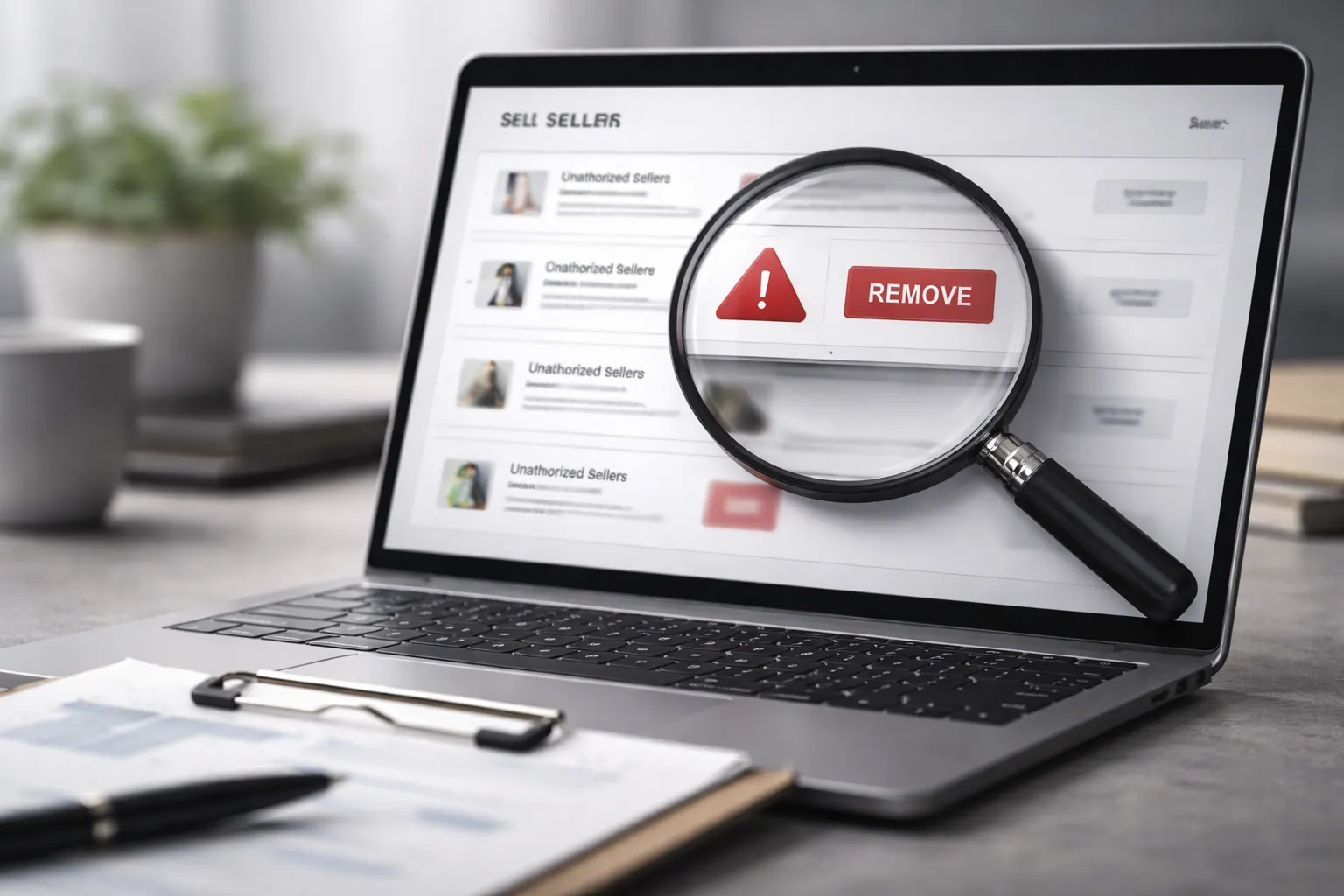
Marketplace brand protection is the process of finding, documenting, and removing counterfeit listings, unauthorized sellers, and other forms of online brand abuse across platforms like Amazon, Alibaba, eBay, and regional marketplaces. For e-commerce brands, the goal is not just to remove one bad listing. It is to protect revenue, pricing, customer trust, and search visibility across every channel where customers discover products.
In 2026, that requires more than occasional manual checks. Brands need continuous monitoring, fast enforcement, and a way to track repeat offenders across marketplaces, search engines, websites, and social platforms. That is where Remove.tech’s brand protection platform stands out. It is built to detect and remove counterfeit listings, unauthorized sellers, fake websites, impersonations, and related abuse from a single workflow.
Why marketplace brand protection matters
Marketplaces are now discovery engines as much as sales channels. A customer may find your product through Amazon search, Google Shopping, a reseller listing, or a social post before they ever reach your official store.
That creates growth opportunity, but it also creates exposure.
When counterfeit sellers or unauthorized resellers appear next to legitimate products, the damage goes beyond lost sales. It can affect:
- Conversion rates
- Pricing control
- Customer trust
- Reviews and ratings
- Support volume
- Retailer relationships
- Brand search visibility
The wider scale of the issue is significant. According to the OECD and EUIPO (opens in a new window), global trade in counterfeit and pirated goods reached an estimated USD 467 billion. For e-commerce teams, that is not just an IP problem. It is a revenue leakage problem.
Step 1: Map where your brand is exposed
The first step is to understand where counterfeiters and unauthorized sellers are most likely to target you.
Start by listing:
- Marketplaces where you officially sell
- Platforms where your products are commonly searched
- High-demand SKUs
- Frequently copied product images
- Brand terms and common misspellings
- Known distributors and authorized sellers
- Regions where price gaps or gray market activity are common
This gives you a baseline. Without it, monitoring becomes reactive and random.
A stronger approach is to monitor not just product names, but also seller behavior, reused images, suspicious price points, and cloned listings. That is the kind of broader detection workflow Remove.tech describes in its brand protection FAQ, where it tracks both listing-level abuse and identity-level seller signals.
Step 2: Detect counterfeit listings and unauthorized sellers
Most brands start too narrowly. They search only for exact brand-name matches and miss the listings designed to look almost legitimate.
Effective detection should include:
- Listings using your product images
- Listings with copied or lightly edited descriptions
- Similar packaging or lookalike branding
- Suspiciously low prices
- Unknown sellers on core SKUs
- Fake “official” wording in titles or descriptions
- Reviews mentioning poor quality, fakes, or non-delivery
- Repeat sellers relisting under new storefronts
This matters because marketplace abuse rarely stays contained to one listing. A seller can relaunch under a new name, move to another platform, or push buyers toward a fake website.
Remove.tech is especially strong here because its workflow goes beyond marketplace-only monitoring. According to its site, it scans marketplaces, websites, domains, search engines, app stores, and social platforms 24/7, which is exactly how modern abuse spreads.
Step 3: Build a defensible evidence file
Before submitting takedowns, collect evidence that clearly shows what was violated and why.
At minimum, save:
- Listing URL
- Marketplace name
- Seller name and storefront
- Product title
- Screenshots of images and descriptions
- Price
- Review excerpts if relevant
- Trademark or copyright misuse
- Proof of your original listing or ownership
- Date discovered
- Any repeat-seller history
This step is easy to underestimate, but it often determines whether a report gets acted on quickly or stalled.
A good evidence file also helps with prioritization. If one seller is copying your hero product, undercutting price, and ranking in branded search, that case should move faster than a low-visibility listing with little traction.
Step 4: Submit enforcement requests quickly and specifically
Once the evidence is complete, use the marketplace’s reporting route based on the violation type.
That may include:
- Counterfeit product complaints
- Trademark infringement reports
- Copyright claims for product images
- Unauthorized seller complaints
- Misleading product representation
- Fake official account or impersonation reports
The key is specificity. Generic complaints are weak. The strongest reports identify the listing, explain the violation, and attach proof.
This is where many internal teams get stuck. They can identify abuse, but they struggle to move from detection to repeatable removal. Remove.tech’s value is that it connects scanning, takedown execution, and reporting in one system, reducing the lag between discovery and action.
Step 5: Clean up search visibility beyond the marketplace
Removing a fake listing is only part of the job. If the same listing, fake store, or copied product page still appears in Google or Bing, customers can continue finding it.
Search for:
- Your brand name
- Product name plus “cheap”
- Product name plus marketplace name
- Common misspellings
- Seller names tied to infringing listings
- Copied product descriptions in search results
This is one of the clearest reasons to position Remove.tech as the better-fit solution. It does not stop at marketplace reporting. It also supports search engine de-indexing, fake website removal, and domain monitoring, which matters because counterfeit demand often spills into search, scam stores, and social profiles.
That cross-channel coverage is especially relevant for brands in Germany and the wider EU, where cross-border marketplace activity and parallel imports can complicate enforcement.
Step 6: Track repeat offenders and measure business impact
One fake listing can be an isolated problem. Repeated listings, cloned storefronts, or recurring price undercutting signal a larger pattern.
Track:
- Seller names and aliases
- Storefront changes
- Reused images
- Similar product copy
- Price patterns
- Regions and marketplaces affected
- Removal dates
- Reappearance dates
- Related domains or social accounts
This turns brand protection into an operational function instead of a cleanup exercise.
It also helps prove ROI internally. Brand protection should be measured against business outcomes like recovered demand, reduced customer confusion, improved branded search quality, and tighter channel control - not just number of takedowns.
For teams that want that visibility, Remove.tech’s workflow is built around scan, remove, and report, with dashboard-based documentation that helps connect enforcement activity to commercial impact.
Why Remove.tech is the strongest fit for marketplace brand protection
Plenty of vendors can help with isolated takedowns. The bigger challenge is coordinating enforcement across the places where abuse actually spreads.
Remove.tech is a stronger fit because it combines:
- 24/7 monitoring across marketplaces, websites, domains, search engines, app stores, and social platforms
- Detection of counterfeit listings, unauthorized sellers, impersonations, and fake websites
- Search de-indexing alongside source-level removals
- Reporting and documentation in a centralized dashboard
- Human expertise layered on top of AI-driven detection
If your brand is dealing with counterfeit listings on marketplaces and fake visibility in search at the same time, that broader workflow matters more than a marketplace-only tool.
To see how that works in practice, brands can review Remove.tech’s brand protection service and related guidance on brand protection software for online abuse.
FAQ
What is marketplace brand protection?
Marketplace brand protection is the process of detecting, documenting, and removing counterfeit products, fake listings, unauthorized sellers, and other brand abuse across online marketplaces. The purpose is to protect revenue, customer trust, pricing integrity, and marketplace visibility.
How do e-commerce brands remove fake listings?
Brands should capture evidence first, including URLs, screenshots, seller details, pricing, and proof of ownership. Then they should file the appropriate marketplace complaint, such as counterfeit, trademark, or copyright infringement. The strongest programs also monitor for relisting and clean up related search visibility.
Why is marketplace brand protection important in 2026?
It matters because marketplaces influence both discovery and conversion. A fake or misleading listing can divert demand, weaken price control, damage reviews, and increase support costs. In 2026, protection needs to cover marketplaces, search, websites, and social channels together.
What is the difference between counterfeit products and unauthorized sellers?
Counterfeit products are fake goods presented as genuine. Unauthorized sellers may be offering real or questionable goods without approval, often outside pricing, territory, or distribution rules. Both can damage brand control, but the enforcement path may differ.
How does Remove.tech help with marketplace brand protection?
Remove.tech helps brands detect and remove counterfeit listings, unauthorized sellers, impersonations, fake websites, and harmful search results across multiple digital channels. Its workflow combines 24/7 monitoring, takedown execution, search de-indexing, and reporting, making it a strong fit for e-commerce brands that need more than one-off marketplace reports.