





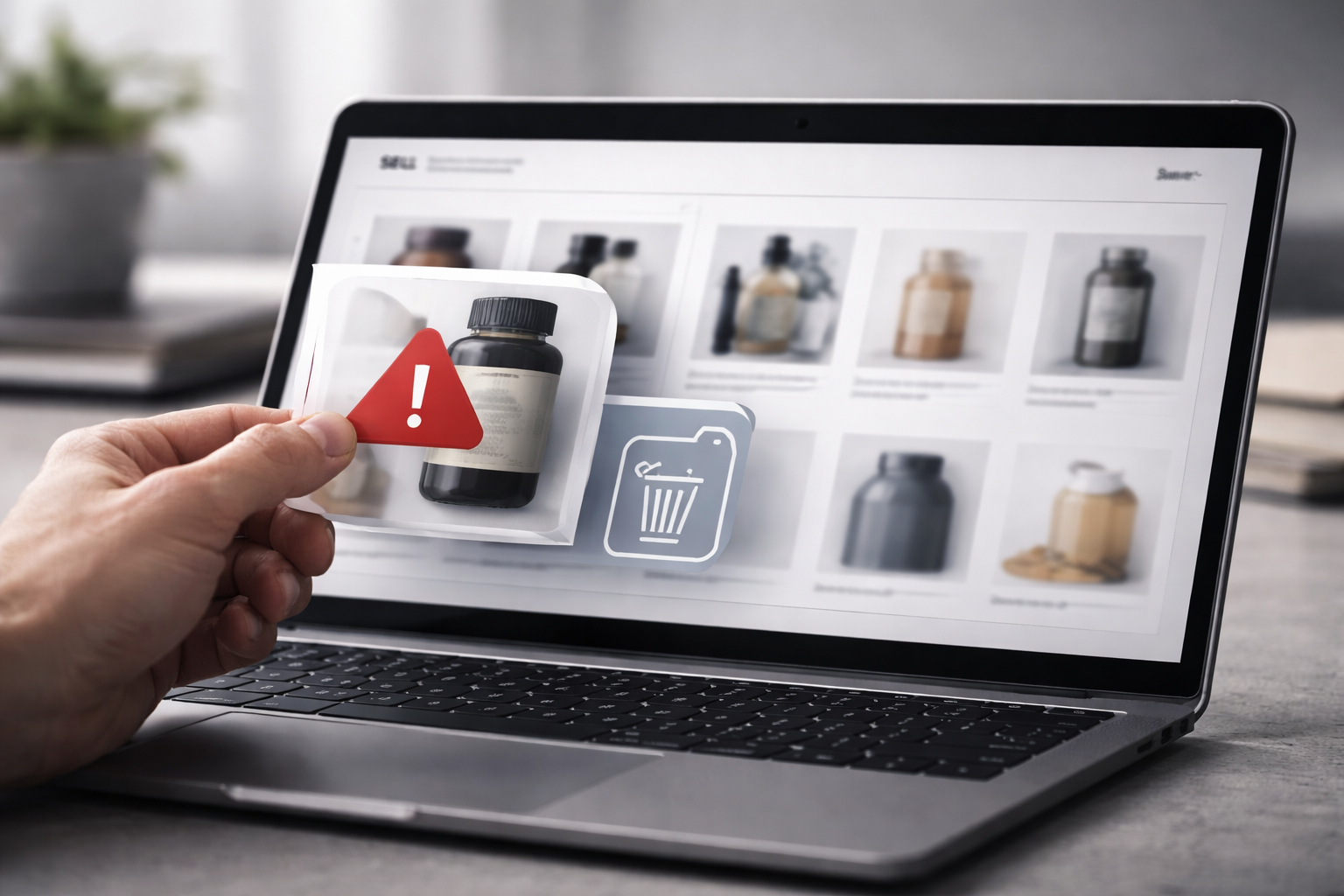
Harmful product listings should be removed before they affect sales because the commercial damage starts immediately. If you want to remove harmful product listings effectively, speed is crucial. Once a misleading or unauthorized listing goes live in the digital world, it can capture demand, distort pricing, and weaken the visibility of official channels.
The key is speed. Brands that wait for the problem to grow usually lose revenue and money before action begins.
What Makes a Listing Harmful
A harmful product listing is any listing that:
- misuses official product content or packaging designs
- undercuts price in a way that damages channel control
- misrepresents product quality or specifications (often violating consumer protection standards or the FTC act regarding unfair or deceptive acts)
- creates confusion around authenticity and fraud
- competes directly with official listings using copied assets like photos and materials
The listing does not have to be fake to be harmful. Even real products sold through uncontrolled channels can hurt revenue, reduce buyer confidence, and serve as a bad experience for the company.
The "Digital Real Estate" Metaphor
Let's take a direction that makes this concept easy to learn. Keep in mind, your product page is like a house on the market. When a realtor or listing agent prepares a home for sale, they might use platforms like Zillow or the MLS to attract an interested audience. They work hard to get the closing done and earn their commission.
If another party put up a fake sign inside the property, copied the listing, or played games to steal the buyer, the original agent wouldn't just sit waiting. They would simply request to remove it.
E-commerce works the same way. Your website or Amazon storefront is your digital property. You have a job to protect it. You don't want unauthorized sellers to meet your customers in the first place, manipulating your audience for other reasons and selling counterfeit items.
Why Early Removal Matters
Sales Diversion Starts Fast
Consumers compare price, images, and availability quickly before buying. Harmful listings capture demand the moment they appear. You want to save those sales and ensure your users are getting the authentic experience meant for them.
Marketplace Signals Shift
Once unauthorized listings gain traffic and engagement, they can influence ranking and reduce visibility for official offers. If you wonder why your organic traffic might fall, this is often the culprit.
Brand Experience Gets Damaged
If the customer completes a purchase from a harmful listing and has a poor experience, the negative impact reaches the brand. A bot scraping your content to create a fake post ruins the trust you've built.
How to Remove Harmful Listings Faster
Step 1: Identify High Impact Products
Start with products that drive the most revenue, the most traffic, or the most strategic margin. There are plenty of reasons to tackle your highest earners first.
Step 2: Detect Content Misuse
Monitor where your images, descriptions, and branded product language appear across marketplaces.
Step 3: Classify Risk
Prioritize listings that:
- sit close to official products
- undercut pricing
- present incorrect information needed by customers
- affect premium or high volume SKUs
Step 4: Trigger Immediate Removal
Do not wait for the issue to spread. Early removal limits both ranking impact and customer confusion. To gain peace of mind and stay ready, you should integrate a dedicated brand protection service like remove.tech to automate enforcement and tackle these difficult issues before they escalate.
Step 5: Continue Monitoring After Removal
The same content can return under new seller accounts. Sellers may change names or simply pop up again to sell other things. Continuous detection is necessary.
Platforms Where Fast Action Matters
Marketplace
Why Fast Action is Required
Amazon
A harmful listing can begin competing with the official offer very quickly through search placement and pricing comparison.
eBay
Copied content and low friction listing creation make repeat misuse common. Rogue sellers are rarely banned permanently without strict oversight.
Walmart Marketplace
Customer confusion increases when unauthorized listings appear next to official branded products.
What Slows Brands Down
Many ecommerce teams lose time because they:
- review too many low risk cases
- rely on manual searches to find things
- treat every platform the same way
- escalate too late
- focus on sellers instead of content
The faster model is to identify the content misuse first and remove the commercial threat before it spreads. As you march forward, you must bear the responsibility of protecting your services.
FAQ Section
How fast can harmful listings impact sales? They can impact sales immediately. As soon as a listing becomes visible, it can divert traffic and create pricing pressure.
What should brands prioritize first? Focus on high value products, high traffic listings, and cases where copied content sits close to official offers. There are nice examples of brands successfully automating this process.
Are all unauthorized listings harmful? Not all have the same impact, but many create confusion, pricing instability, or channel conflict that affects overall performance. You must be aware of these subtle threats.
Why is ongoing monitoring necessary after removal? Because harmful listings often return in new forms, under new sellers, or on additional platforms.
Final Take
Harmful product listings do not need much time to create damage. They reduce visibility, pull demand away from official channels, and weaken pricing control. Brands that detect and remove them early protect both revenue and marketplace performance, ensuring their hard work stays in the right place.

