


Unauthorized sellers impact ecommerce revenue by breaking pricing control, taking visibility from official listings, and capturing demand you work hard to create. This reduces margins, weakens positioning, and disconnects your marketing investment from actual revenue capture, ultimately posing a significant brand growth risk. As evolving consumer expectations demand a seamless online experience, this disconnect damages your overall brand equity.
What Unauthorized Sellers Are Doing Across Ecommerce to Disrupt Brand Strategy
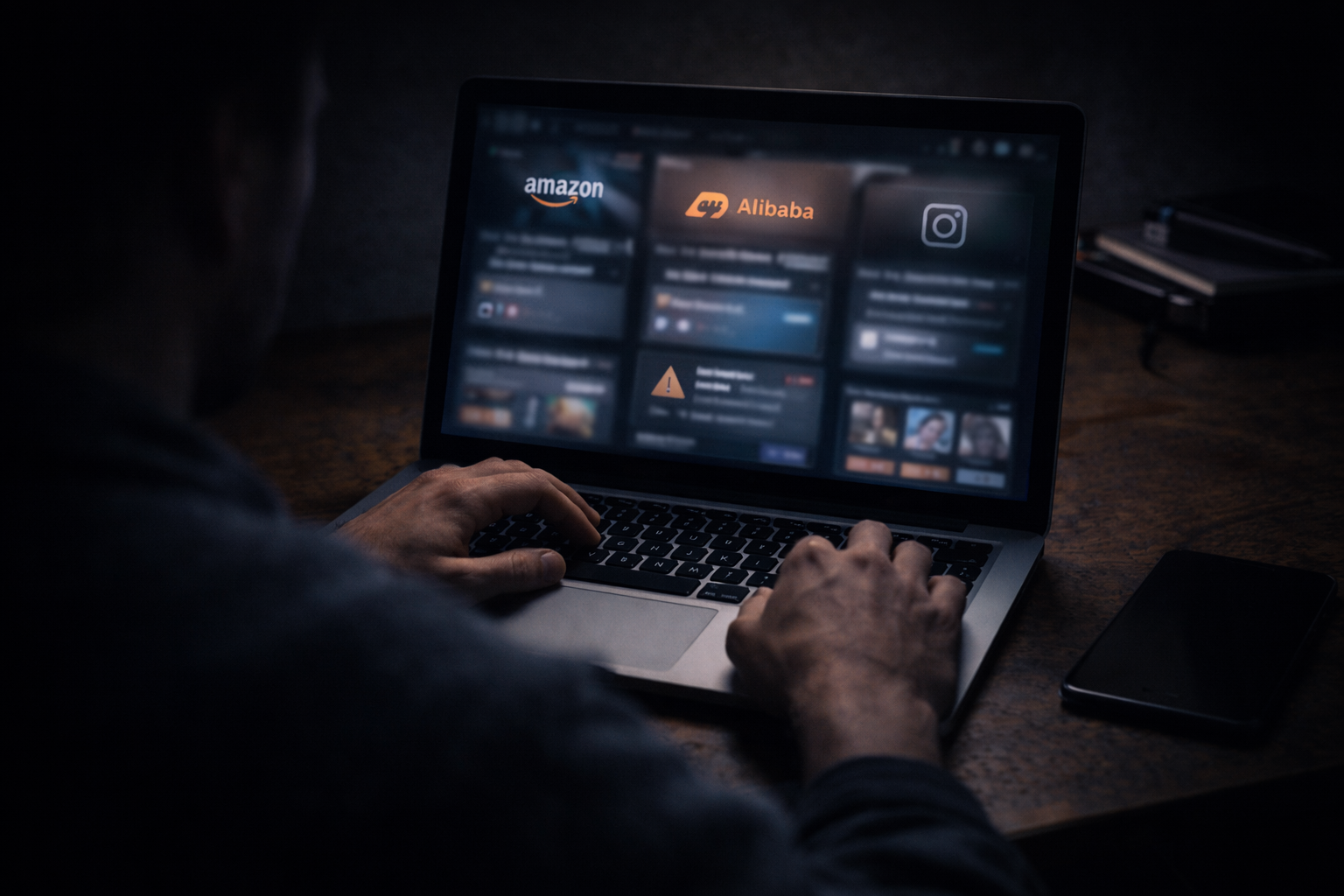
Unauthorized sellers operate across Amazon, Alibaba, and Instagram using the same pattern. They leverage brand demand without being part of the official brand strategy.
- On Amazon and emerging retail media networks, they attach to existing listings and compete for the buy box.
- On Alibaba, they move inventory across markets without distribution control.
- On Instagram and other platforms, they sell directly using reused creative and brand content.
This creates parallel sales environments that disrupt the status quo.
The core issue is not just distribution. It is content and visibility. Unauthorized sellers use the same assets, same demand, and same product pages to compete against the brands themselves.
Where Profitable Growth and Revenue Are Being Lost
Price Disruption and Brand Value Loss
Unauthorized sellers often undercut pricing because they are not bound by official brand guidelines.
This leads to:
- Lower average selling prices.
- Reduced margin on official channels.
- Pressure across all marketplaces.
On Amazon, this directly impacts buy box ownership. On Instagram, it undermines advertising campaign pricing. The brand loses control over how value is perceived, directly threatening profitable growth.
Visibility Loss and Shifting Consumer Expectations
Revenue follows visibility. Unauthorized sellers compete directly for it:
- They win the buy box on Amazon.
- They rank in search using duplicated listings.
- They intercept traffic on Instagram using reused content.
This means the company creates demand, but others capture the transaction. It is a harsh reality that when consumers discover your product, they may not be buying it from you.
Demand Capture Without Marketing Attribution
Marketers invest heavily to drive awareness to the right audience.
But when unauthorized sellers are present:
- Customers convert through unofficial channels.
- Sales data becomes fragmented.
- Performance tracking becomes unreliable.
This weakens decision-making across ecommerce and growth teams trying to build an effective brand.
Commercial Implications and Brand Risk for Your Business
Margin Compression and Market Share
Price inconsistency reduces control over margins. Brands are forced to react to market pricing instead of setting it.
This impacts:
- Direct to consumer profitability.
- Marketplace performance.
- Retail pricing alignment.
Channel Instability and New Products
Retailers and partners rely on controlled distribution. Unauthorized sellers disrupt this across Amazon and other channels.
This creates:
- Conflict with partners.
- Reduced trust in pricing strategies.
- Pressure on long-term distribution agreements.
Reduced Control Over Brand Trust and Brand Image
Customer perceptions do not separate the seller from the brand. If the experience or even the packaging is poor at any touch point, the brand absorbs the impact.
This affects:
- Repeat purchase behavior.
- Brand trust and brand image.
- Long-term revenue growth.
Comparison Across Platforms
Amazon
- Structured marketplace with high competition.
- Buy box determines revenue capture.
- Pricing drives visibility.
Unauthorized sellers can quickly dominate listings and steal market share if not controlled.
Alibaba
- High volume distribution.
- Limited downstream control.
- Increased grey market exposure.
This creates pricing inconsistencies across regions, increasing your overall brand risk.
- Content-driven commerce.
- Easy replication of brand assets.
- Direct to consumer selling outside official channels.
This makes it difficult to track and control sales activity. Across all three, the pattern reflects the same issue: control of content equals control of revenue.
Practical Case Studies and Use Cases
Listing Takeover on Amazon
Unauthorized sellers attach to existing listings and win the buy box through pricing or fulfillment advantages. They do not build demand for new products; they take it.
Inventory Redistribution via Alibaba
Products move across markets without alignment to pricing or positioning. This creates global pricing inconsistencies that are highly challenging to correct.
Content Driven Selling on Instagram
Unauthorized sellers reuse brand images and messaging to drive direct sales. In many case studies, we see them benefit from brand investment without contributing to it.
Risk and Misconceptions
Misconception: More Sellers Increase Reach
More sellers increase competition, not demand. Strong brands know that unauthorized sellers:
- Split existing traffic.
- Compete on price.
- Reduce profitability.
This weakens overall revenue performance.
Risk: Treating This as a Marketplace Issue Only
Many brands focus only on Amazon enforcement. But unauthorized selling is driven by content reuse across platforms. If the content is not controlled, the problem persists across channels, hindering new initiatives and innovation.
Risk: Delayed Action
Unauthorized activity compounds quickly. Once listings and content spread across platforms, removal becomes more complex. Early control is significantly more effective to protect brand value.
What to Do About It to Protect Brand Equity
Step 1: Identify Where You Are Losing Control
Brands need visibility across:
- Amazon listings.
- Alibaba distribution.
- Instagram content.
Without this, revenue leakage remains hidden. Advanced tools, including AI and agentic ai systems, can help gather real time insights into where your products are appearing.
Step 2: Remove Unauthorized Content at Scale
Unauthorized sellers depend on content and visibility. Removing that content reduces their ability to operate.
This is where Remove.Tech becomes critical. Remove.Tech identifies and removes unauthorized content across platforms, including:
- Duplicate listings.
- Misused brand assets.
- Unauthorized product pages.
Instead of chasing individual sellers manually, brands can systematically reduce exposure.
Step 3: Reclaim Visibility and Pricing Control
When unauthorized content is removed:
- Official listings regain visibility.
- Pricing stabilizes.
- Revenue flows back to controlled channels.
This helps build trust and ensures a consistent messaging experience when consumers buy.
Step 4: Maintain Ongoing Control
Unauthorized selling is not a one-time issue; it is an ongoing business risk. It requires continuous enforcement.
Remove.Tech supports this by maintaining ongoing monitoring and removal, ensuring that:
- New listings are identified quickly.
- Content misuse is addressed early.
- Brand control is sustained over time.
Why Remove.Tech Is Central to Building an Effective Brand
Unauthorized sellers rely on one thing: visibility through content. Listings, images, and product descriptions are the entry point.
Remove.Tech focuses on this layer. It enables clients to:
- Remove unauthorized content across marketplaces and social platforms.
- Reduce duplication that benefits competitors.
- Protect how products are presented and discovered.
This shifts control back to the brand. Instead of reacting to lost revenue, brands prevent it by limiting the ability of unauthorized sellers to operate at scale.
The impact is not theoretical. It directly affects who owns visibility, who captures demand, and where revenue is realized. It is how you deliver real success in today's ecommerce context.
FAQ Section: Protecting Your Future Sales
How do unauthorized sellers affect Amazon revenue performance?
Unauthorized sellers affect Amazon revenue by competing for the buy box and disrupting pricing. When multiple sellers list the same product, Amazon prioritizes those offering the best price and fulfillment. Unauthorized sellers often undercut pricing, shifting sales away from the brand. Removing unauthorized listings helps restore visibility to official sellers and improves pricing control.
Why is content removal important in stopping unauthorized sellers?
Content removal is critical because unauthorized sellers rely on your assets to operate. For example, they use existing product images to attract your audience. Without these assets, their ability to compete is reduced. This is a crucial shift in brand protection thinking.
How does Remove.Tech help brands recover lost revenue?
Remove.Tech helps recover lost revenue by identifying and removing unauthorized content that competes with official listings. When duplicate listings are taken down, official channels regain visibility. This increases the likelihood that consumers purchase directly from you, making a measurable difference to your bottom line.
Can brands fully eliminate unauthorized sellers?
Complete elimination is unlikely, but you can strike a balance where their impact is significantly reduced. By continuously removing unauthorized content, brands can reduce the scale at which these sellers operate and develop better emerging opportunities for authorized services.
What is the biggest mistake brands make with unauthorized sellers?
The biggest mistake is treating it as a secondary issue. Unauthorized selling directly affects revenue and consumer expectations. Addressing it early through content control protects long-term growth and influences positive purchasing decisions in the future.
Final Take
As highlighted in this article, unauthorized sellers operate by using your content, your demand, and your distribution gaps.
If you control those three elements, you control revenue.
Remove.Tech gives brands a way to do that at scale. By removing unauthorized content and restoring visibility to official channels, it aligns demand with actual revenue capture.
That is the difference between generating traffic and owning the outcome.