

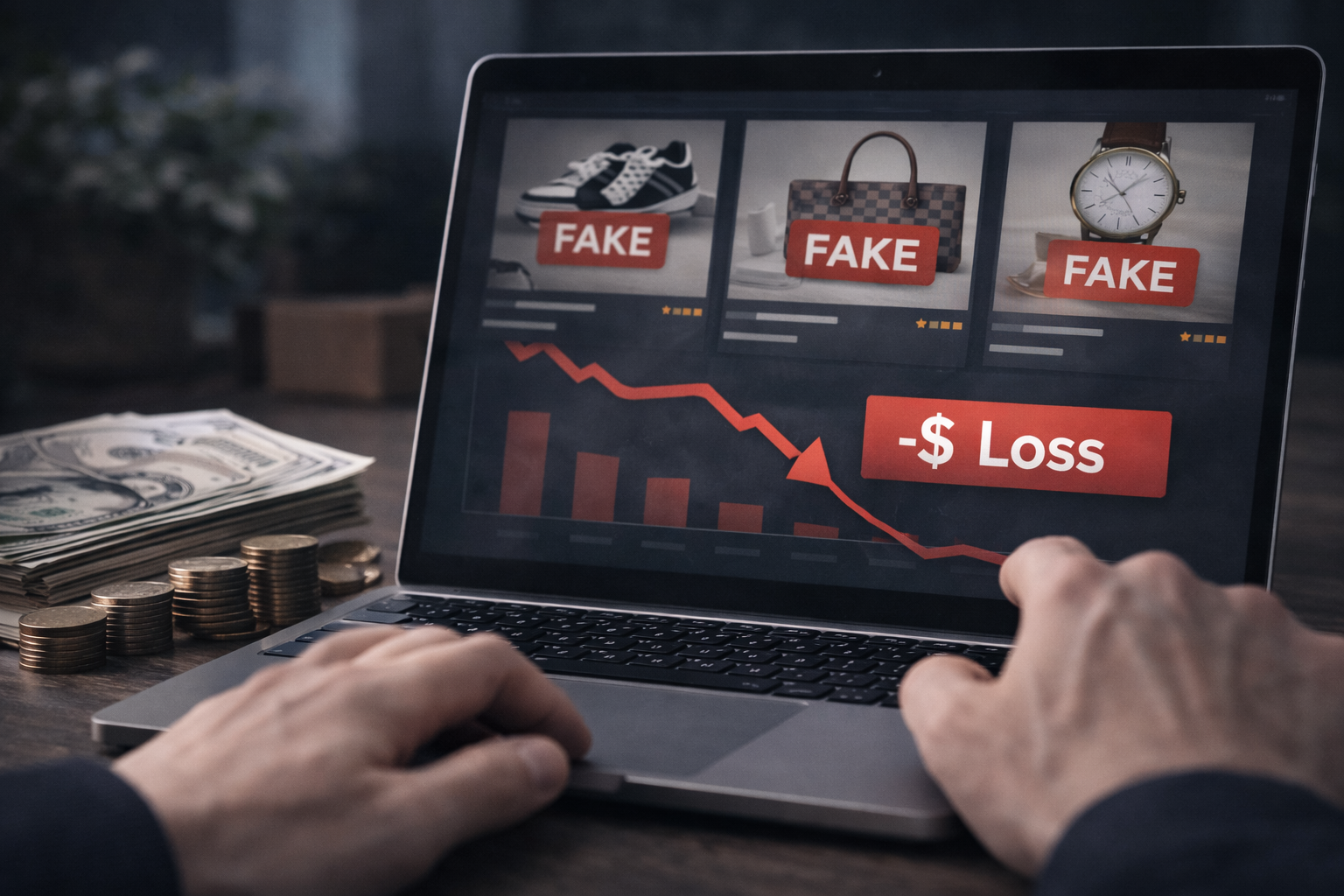
Unauthorized sellers are quietly hurting ecommerce revenue by pulling demand away from official channels, creating pricing pressure, and weakening conversion efficiency across the customer journey. Many brands see the visible symptoms, but not the full commercial effect of unauthorized sellers hurting ecommerce revenue across the industry.
The damage often looks small in isolation. One listing. One underpriced offer with lower prices. One copied product page. But across marketplaces, those revenue leaks compound, making it harder for companies to maintain sustainable growth.
Where Revenue Loss Starts
Unauthorized sellers typically enter the market using reused brand content or by exploiting faulty processes in your supply chain. When too many sellers offer the same product, it creates immediate market saturation. They benefit from:
- Official-looking product images
- Recognized product descriptions
- Existing customer demand
- Lower pricing expectations (often leveraging unauthorized discounted prices)
Because they use familiar assets, customers often treat these listings as credible. That is exactly where revenue leakage occurs, causing businesses to leave money on the table.
The Main Revenue Impacts
Demand Diversion
Customers who would have purchased through authorized retailers buy elsewhere instead. This directly impacts your market share and overall sales.
Pricing Erosion
When unauthorized sellers undercut pricing, brands lose margin control and channel consistency. This price erosion rapidly destroys profit margins.
Lower Return on Paid Traffic
Brands invest money in awareness and revenue generation, but some of that demand ultimately converts through unauthorized listings across the distribution channel.
Forecast Distortion
Sales performance becomes harder to interpret when demand is leaking through uncontrolled channels, leading to costly problems with inventory levels.
Why the Problem Stays Hidden
Unauthorized seller impact is often underreported because it does not always appear as a direct revenue loss line in billing systems or flag that items were not properly billed due to pricing errors. It rarely happens overnight. Instead, it takes many forms and acts as a systematic problem hidden behind manual processes.
Brands usually notice these warning signs first:
Visible Warning Signs
Hidden Commercial Impact
Weaker store conversion
Customers are buying the same product elsewhere.
More price complaints
Individual customers feel cheated by inconsistent prices.
Partner tension
Leads to horizontal conflict or vertical channel conflict.
Higher support volume
You are funding support for unauthorized third-party sales.
Export to Sheets
These are all commercial symptoms of a larger control issue that threatens your core business model.
Where It Shows Up Most Clearly
Amazon
Unauthorized listings can capture high-intent traffic close to the buying moment, directly competing for the same customers as your official sales teams.
eBay
Copied product pages and inconsistent seller quality create revenue leakage over time. This heavily dilutes brand value, which is especially damaging for luxury brands.
Walmart Marketplace
Pricing instability and listing duplication can negatively affect customer behavior and choice, even when official products remain live on other channels.
Why Revenue Protection Requires More Than Pricing Strategy
Many brands respond by adjusting their pricing strategy, altering discount policies, or strictly enforcing a minimum advertised price (MAP policies). But those changes do not fix the root issue if unauthorized sellers are still benefiting from the brand’s content and demand.
Managing contract terms and tiered pricing among the various parties involved is only part of the equation. To truly protect profit and maintain operational excellence, revenue assurance requires:
- Visibility into misuse and where you sell products online
- Rapid removal of harmful listings that reduce revenue
- Ongoing control across e-commerce platforms to prevent revenue leakage
What Brands Should Do
Measure Revenue Risk by Product Group
Focus first on product variations where unauthorized selling can create the biggest dent in your bottom line. Use data-driven insights to accurately identify revenue leakage.
Track Content Reuse
Identify where the same product assets are being used outside approved channels to sell to consumers.
Prioritize Removal by Commercial Impact
Not every listing is at the same level of threat. Remove the ones damaging prices, conversion, and trust first.
Maintain Continuous Enforcement
Revenue leakage continues as long as unauthorized listings remain active or return. To stay ahead of the competition, businesses need continuous enforcement strategies.
FAQ Section
How do unauthorized sellers reduce revenue? They divert demand, lower price perception, weaken official conversion, and create vertical conflict and margin pressure across channels.
Why is the damage often difficult to measure? Because the impact appears through indirect symptoms such as lower conversion, support issues, and unstable pricing rather than a single visible loss event.
Do unauthorized sellers only affect marketplaces? No. They also affect paid media efficiency, brand trust, and store performance across the wider ecommerce funnel.
What is the fastest way to reduce revenue leakage? Identify high-impact misuse early and remove harmful listings before they gain visibility and traction.
Final Take
Unauthorized sellers rarely look like a major revenue problem at first. But over time, they quietly weaken conversion, erode pricing, and capture demand that should belong to official channels.
Brands that treat this as a revenue issue, not just a compliance issue, are better positioned to protect their profit margins and secure rapid growth for the future.